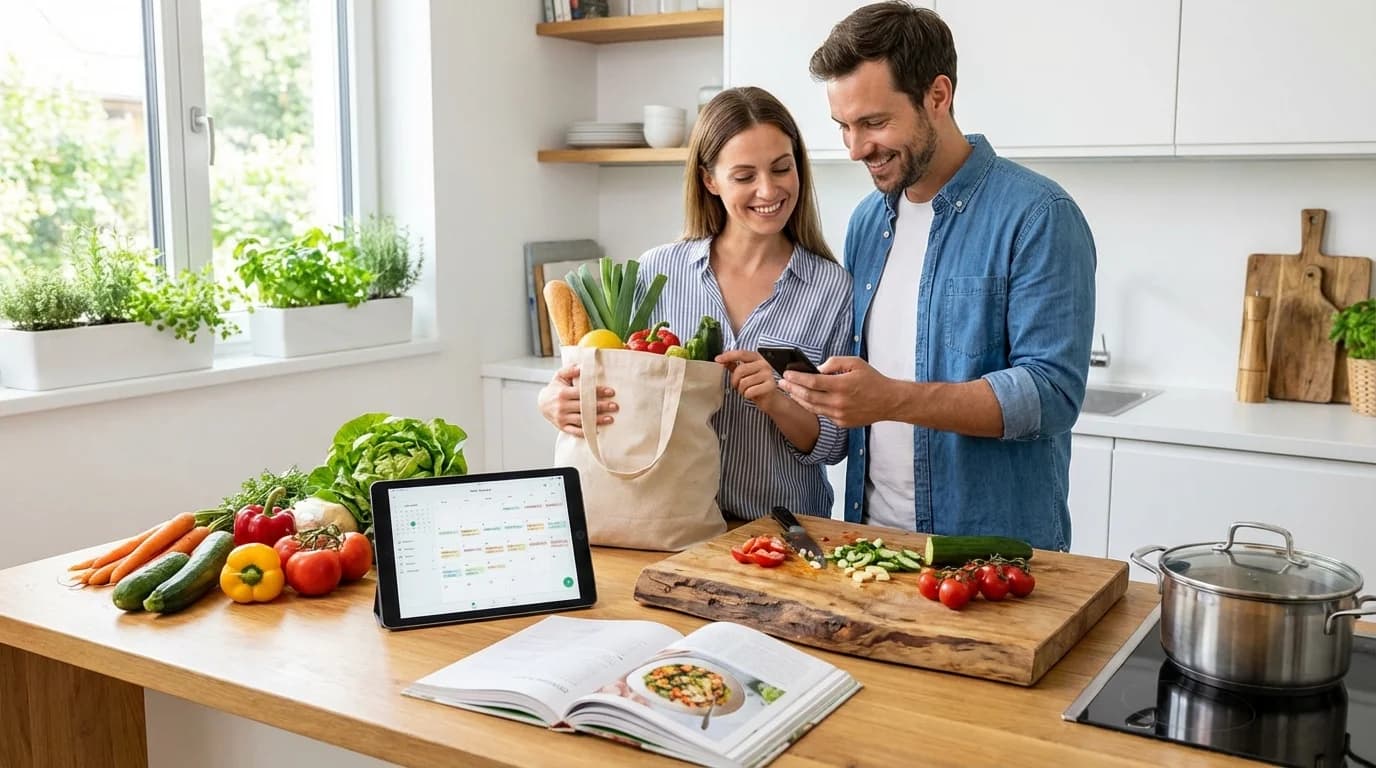
Meal planning as a couple requires coordination, communication, and compromise. When done well, it strengthens your relationship, saves money, and ensures you both eat well. When done poorly, it becomes a source of tension and takeout orders.
This guide provides practical systems for couples meal planning—from decision-making to shopping to cooking together, creating a sustainable routine that works for both partners.
Why Couples Need a Meal Planning System
Without a System:
- Daily "what's for dinner?" stress
- Defaulting to expensive takeout
- One person carries the entire mental load
- Food waste from uncoordinated shopping
- Dietary preferences clash
- Resentment builds
With a System:
- Shared decision-making
- Reduced stress and costs
- Balanced responsibilities
- Less food waste
- Accommodates both preferences
- Quality time together
The Numbers:
- Average couple eating out 4x weekly: $320/month
- Average couple meal planning: $100/month savings
- Annual savings: $1,200-1,800
- Plus: Better health, less stress, more connection
Finding Your Couple's Meal Planning Style
Style 1: Full Partnership
How It Works:
- Plan meals together
- Shop together
- Cook together
- Equal division of all tasks
Best For:
- Couples with similar schedules
- Both enjoy cooking
- Want maximum quality time
- Equitable relationship values
Time: 2-3 hours weekly total (both partners)
Style 2: Rotation System
How It Works:
- Alternate weeks being "in charge"
- Responsible person plans, shops, and cooks
- Other person cleans up
- Switch weekly or bi-weekly
Best For:
- Different skill levels
- One partner travels frequently
- Clear division of labor preferred
- Busy schedules
Time: 2-3 hours weekly (one partner)
Style 3: Specialized Roles
How It Works:
- One person: Planning and shopping
- Other person: Cooking
- Divide based on strengths and preferences
- Both involved, different tasks
Best For:
- Complementary skills
- One loves shopping, other loves cooking
- One works from home, other commutes
- Playing to strengths
Time: Split between partners
Style 4: Hybrid Approach
How It Works:
- Plan together (30 minutes weekly)
- One person shops
- Alternate cooking nights
- Both participate, flexible roles
Best For:
- Most couples (most flexible)
- Different schedules
- Sharing load without rigidity
- Real-world practicality
Time: Shared, varies by week
Recommendation: Start with Hybrid, adjust based on what works.
The Weekly Planning Process
Sunday Planning Session (30 minutes)
Together, Decide:
Step 1: Check Schedule (5 minutes)
- Work commitments this week?
- Evening plans or events?
- Who's home which nights?
- Any special occasions?
Step 2: Choose Meals (15 minutes)
- Decide number of home-cooked dinners (usually 4-5)
- Each person suggests 2 meals
- Compromise on remaining meals
- Account for leftovers
Step 3: Create Shopping List (10 minutes)
- Check pantry and fridge
- List ingredients needed
- Divide into categories
- Note who's shopping when
Result: Clear plan, shared understanding, aligned expectations.
Sample Planning Conversation
Partner A: "I have late meetings Tuesday and Thursday this week."
Partner B: "Okay, so quick meals those nights. How about quesadillas Tuesday?"
Partner A: "Perfect. I can make those in 10 minutes. I'll cook Monday and Wednesday. You do Friday?"
Partner B: "Works for me. What about Saturday?"
Partner A: "Let's try that new Thai recipe we saved."
Partner B: "Love it. I'll shop Saturday morning, we can cook together for dinner."
Done in 5 minutes.
The Three-Day Planning Method
Instead of Full Week: Plan just 3 days at a time.
Why It Works:
- More flexibility
- Less overwhelming
- Fresher ingredients
- Accommodates schedule changes
- Reduces food waste
How:
- Sunday: Plan Monday-Wednesday
- Wednesday: Plan Thursday-Saturday
- Quick 15-minute check-ins
Best For:
- Unpredictable schedules
- Both work long hours
- Value spontaneity
- Small fridges
See our cooking for two recipes for meal ideas.
Shopping Strategies for Couples
Shopping Together
Pros:
- Quality time
- Shared decision-making
- Both see what's available
- No forgetting items partner wanted
Cons:
- Takes longer
- Potential disagreements
- Both must be available
Make It Better:
- Go mid-week (less crowded)
- Divide list by store sections
- Make it date-like (stop for coffee after)
- Use shared list app (add items throughout week)
Shopping Separately
Pros:
- More efficient
- Flexible timing
- Leverages whoever has time
- Can hit different stores
Cons:
- May forget items
- Requires clear list
- Less connection time
Make It Better:
- Detailed shared list (app)
- Text photos if uncertain ("Is this the right cheese?")
- Stick to list (avoid duplicates)
- Quick video call if major question
Hybrid Shopping
Best of Both:
- Big monthly shop together (Costco, stock-up)
- Quick weekly shop solo (whoever's convenient)
- Fresh items 2x weekly (whoever's nearest)
Recommended for most couples.
Shopping List Tools
Shared Apps:
- AnyList: Great for couples, shared lists, recipes
- OurGroceries: Simple, syncs instantly
- Todoist: Multi-purpose, includes shopping
- Apple Notes/Google Keep: Free, simple sharing
Features to Use:
- Real-time sync
- Check off items as you shop
- Add items throughout week
- Categorize by store section
Check our budget grocery shopping tips.
Cooking Together Successfully
Division of Tasks
Simultaneous Cooking:
- One person: Main dish
- Other person: Side dishes
- Coordinate oven/stovetop use
- Set timer for final assembly
Example:
- Partner A: Pan-searing chicken
- Partner B: Roasting vegetables, making salad
- Both ready at same time
Sequential Cooking:
- One person: Prep (chopping, measuring)
- Other person: Cooking
- Switch roles next time
- Good for learning together
Parallel Processing:
- One person: Tonight's dinner
- Other person: Tomorrow's meal prep
- Efficient use of kitchen time
- Gets ahead for busy week
Communication While Cooking
Set Expectations:
- "I'll handle this, you focus on the salad"
- "Can you chop the onion while I start the sauce?"
- "I need the oven at 6:30, are you done by then?"
Avoid:
- Hovering and "helping" when not asked
- Criticizing technique
- Backseat cooking
- Taking over without asking
Do:
- Ask before jumping in
- Offer help, accept "no thanks"
- Appreciate each other's efforts
- Taste and compliment
Making It Enjoyable
Create the Experience:
- Pour wine while cooking
- Play music you both like
- Talk about your day
- Make it quality time, not just task
Weekly Cooking Dates:
- Friday night: Cook together, no rush
- Try new recipe together
- Make it special
- Build tradition
See our date night dinners home for ideas.
Handling Different Dietary Preferences
Common Scenarios
Omnivore + Vegetarian:
- Base meal on vegetables and grains
- Add meat as optional protein
- Each person tops their own
- Example: Taco bar, burrito bowls, stir-fry
Different Spice Tolerances:
- Season mildly during cooking
- Offer hot sauce at table
- Each person adjusts their plate
- Respect preferences, don't judge
Health-Focused + Comfort-Focused:
- Compromise meals
- Healthy base + indulgent topping options
- Rotate who "picks" meal style
- 3 healthy, 2 comfort weekly
Dietary Restrictions:
- Accommodate genuine restrictions
- Find substitutions together
- Explore new ingredients
- Make it adventure, not burden
The Customization Strategy
Cook Once, Eat Different:
Example: Grain Bowl Night
- Base: Rice and roasted vegetables
- Partner A: Adds chicken, cheese, ranch
- Partner B: Adds tofu, avocado, sesame dressing
Everyone Happy.
Example: Pasta Night
- Base: Pasta and sauce
- Partner A: Adds meatballs
- Partner B: Keeps vegetarian, adds extra vegetables
One cooking session, two satisfied people.
Budget Management
Setting Food Budget Together
Discussion Points:
- Total monthly food budget
- Eating out vs cooking
- Grocery store tier (budget vs premium)
- Splurge items (yes or no?)
Common Budgets:
- Tight: $300-400/month
- Moderate: $500-600/month
- Comfortable: $700-800/month
Includes: Groceries + occasional dining out
Split or Shared?
Fully Shared:
- Joint account for groceries
- No tracking who pays
- Simplified
- Requires financial trust
Proportional Split:
- Each contributes based on income
- Fair if income disparity
- Split 70/30 or whatever ratio makes sense
Take Turns:
- Alternate who pays for grocery trip
- Roughly evens out
- Simple tracking
Choose What Works for Your Relationship
Where to Spend, Where to Save
Worth Splurging:
- Quality proteins (buying less but better)
- Fresh produce
- Good olive oil
- Favorite wine or beer
Save Money:
- Generic pasta, rice, canned goods
- Frozen vegetables (same nutrition)
- Store-brand basics
- In-season produce
Balance: Most couples: Splurge on 2-3 items, save on rest.
Meal Prep as a Couple
Sunday Meal Prep Together
2-Hour Sunday Session:
Hour 1:
- Partner A: Prep proteins (seasoning, portioning)
- Partner B: Chop vegetables, prep grains
- Background: Rice cooker running, oven preheating
Hour 2:
- Partner A: Cooking proteins
- Partner B: Roasting vegetables
- Together: Portioning into containers, labeling
Result: 4-5 lunches each, 2-3 dinners prepped, ready for busy week.
Make It Fun:
- Coffee together while prepping
- Music or podcast
- Teamwork makes it faster
- Reward: Rest of Sunday free
Check our meal prep for beginners guide.
Dividing Meal Prep Labor
Specialization:
- One person: Proteins
- Other person: Vegetables and sides
Or:
- One person: Breakfast and lunch prep
- Other person: Dinner prep
Or:
- Together: One big session monthly
- Individual: Quick weekly top-ups
Conflict Resolution
Common Meal Planning Conflicts
"You always pick the same things"
- Solution: Each person suggests 2 meals weekly
- Rule: Can veto max 1 suggestion per week
- Compromise: Try new recipe together monthly
"You never help with planning"
- Solution: Scheduled planning time (both present)
- Calendar: Sunday 11 AM meal planning
- Accountability: Both participate or no complaints
"I end up doing all the cooking"
- Solution: Rotate or assign specific nights
- Visible: Calendar with cooking assignments
- Fair: If one cooks more, other cleans more
"This is too expensive"
- Solution: Set budget together, track spending
- Compromise: Alternate budget/splurge weeks
- Reality check: Compare to eating out costs
Communication Framework
When Issues Arise:
Step 1: Name the Problem "I feel like I'm doing all the meal planning"
Step 2: Listen "What's making it hard for you to participate?"
Step 3: Brainstorm Solutions Together "What if we set a Sunday morning planning date?"
Step 4: Try Solution for 2 Weeks Give it honest effort
Step 5: Evaluate and Adjust "This is working" or "Let's try something else"
Key: Approach as team problem-solving, not blame.
Sample Weekly Plans
Busy Couple (Both Work Full-Time)
Sunday Planning:
- Decide on 3 easy dinners + 2 very quick meals
- Shop Sunday afternoon together
- Prep 2 hours Sunday evening
Week:
- Monday: Meal-prepped grain bowls (5 min assembly)
- Tuesday: Quick pasta (20 min)
- Wednesday: Leftover lunch, scrambled eggs for dinner
- Thursday: Sheet pan chicken and vegetables (30 min, minimal effort)
- Friday: Takeout or date night out
- Weekend: Leisurely cooking or dining out
One Cook, One Non-Cook
System:
- Non-cook: Shops (with detailed list)
- Cook: Plans and prepares meals
- Non-cook: Does all cleanup
- Both: Set table, enjoy together
Fair Division: Each contributes based on skills and preferences.
Different Schedules
System:
- Whoever's home first starts dinner
- Leave notes about plan
- Batch cook weekends
- Lots of freezer meals for grab-and-go
Communication:
- Shared calendar with who's cooking when
- Text updates if plans change
- Flexibility and grace
Your Couples Meal Planning Action Plan
Week 1: Establish System
- Discuss which planning style fits you
- Have first planning session together
- Create shared shopping list
- Try cooking one meal together
Week 2: Refine Process
- Evaluate what worked/didn't
- Adjust responsibilities
- Add meal prep if helpful
- Communicate about improvements
Week 3: Build Habits
- Set recurring planning time
- Create go-to recipe list (10-15 meals)
- Establish shopping routine
- Find your rhythm
Week 4: Make It Sustainable
- Simplify where possible
- Be flexible with plan
- Celebrate successes
- Forgive slip-ups
Beyond Survival: Thriving Together
Meal Planning as Relationship Builder:
- Teamwork and cooperation
- Shared accomplishments
- Quality time together
- Learning about each other
- Building life together
Food as Love Language:
- Cooking for each other
- Considering partner's preferences
- Trying foods they love
- Sharing meals together
- Creating traditions
Long-Term Benefits:
- Financial savings (thousands annually)
- Better health (home cooking)
- Stronger partnership (shared responsibilities)
- Life skills (both can cook)
- Memories and traditions
The Bottom Line
Couples meal planning isn't just about food—it's about building a life together. The couples who plan, shop, and cook together build stronger relationships, save money, and eat better.
Success Formula:
- Communicate: Plan together, even if briefly
- Divide fairly: Play to strengths, share load
- Stay flexible: Life happens, adjust plans
- Make it enjoyable: Quality time, not just chores
- Celebrate: Acknowledge the wins
Expected Results:
- Time savings: Less stress, fewer decisions
- Money savings: $100-200 monthly vs constant eating out
- Relationship benefits: Teamwork, quality time
- Health benefits: Better nutrition, portion control
Start this Sunday. Sit down together for 30 minutes. Plan 3 dinners. Create shopping list. Decide who does what. Try it for a week.
Adjust what doesn't work. Keep what does. Build a system that fits your unique relationship.
Meal planning as a couple isn't always easy, but it's always worth it. Welcome to cooking together.
Ready to put it into practice? Check our easy dinners for two for perfectly portioned recipes to get you started.
About myrecipe
myrecipe helps families save, organize, and share their favorite recipes in one place. Plan meals, create shopping lists, and preserve your culinary traditions.
Start Organizing Recipes