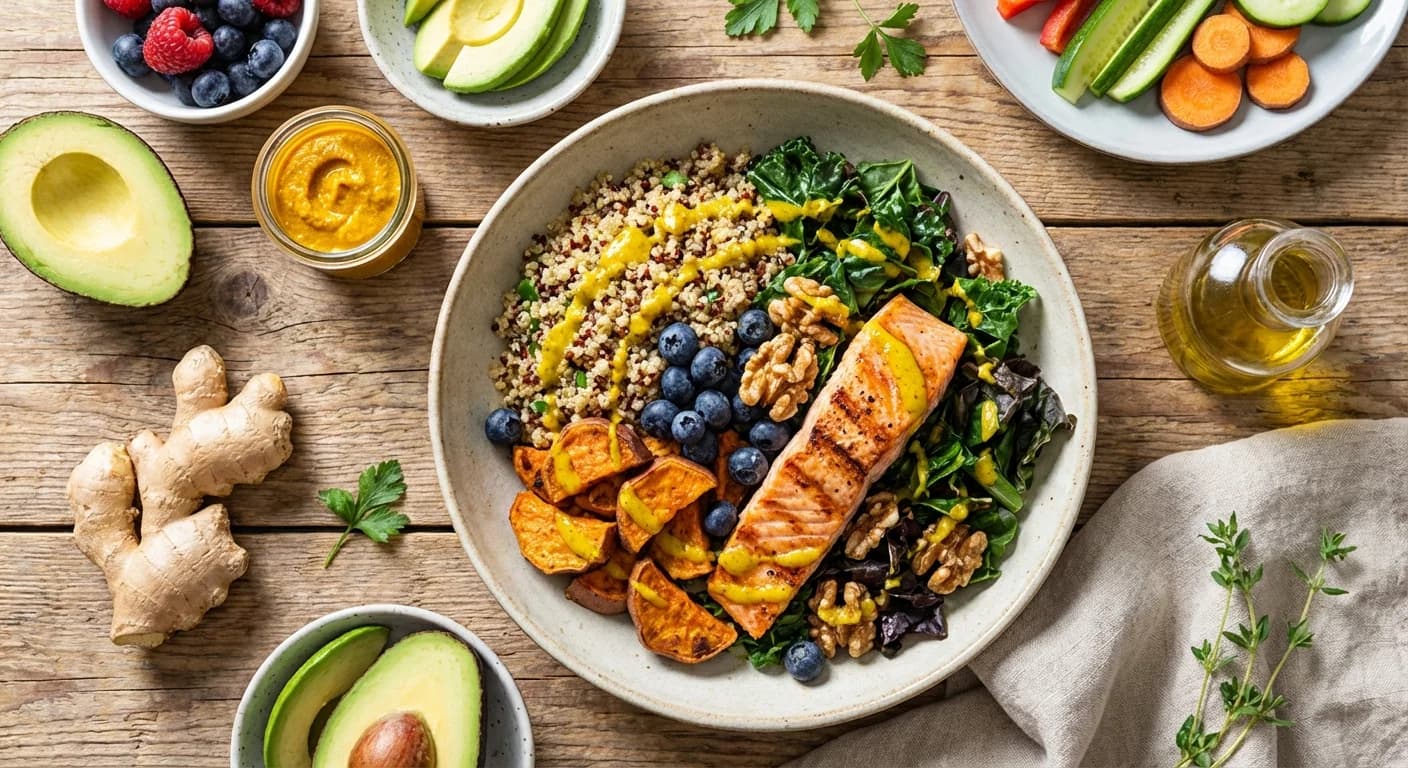
Chronic inflammation is linked to numerous health conditions, from arthritis to heart disease. The good news? The foods you eat can significantly reduce inflammation in your body. These 30 anti-inflammatory recipes feature ingredients scientifically proven to fight inflammation while tasting absolutely delicious.
Understanding Anti-Inflammatory Eating
What is Inflammation? Inflammation is your body's natural response to injury or infection. Acute inflammation is helpful, but chronic inflammation contributes to disease.
Foods That FIGHT Inflammation:
- Fatty fish (salmon, sardines, mackerel)
- Leafy greens (spinach, kale, collards)
- Berries (blueberries, strawberries, cherries)
- Turmeric and ginger
- Olive oil
- Nuts (especially walnuts and almonds)
- Tomatoes
- Green tea
- Dark chocolate (70%+ cacao)
- Whole grains
- Beans and lentils
- Garlic and onions
Foods That CAUSE Inflammation:
- Refined carbohydrates (white bread, pastries)
- Fried foods
- Processed meats
- Excess sugar
- Trans fats
- Excessive alcohol
30 Anti-Inflammatory Recipes
Breakfast Ideas
1. Berry Turmeric Smoothie Bowl Blend frozen berries, banana, turmeric, ginger, spinach, and almond milk. Top with walnuts, chia seeds, and fresh berries.
- Packed with antioxidants and omega-3s
2. Salmon and Avocado Toast Top whole grain toast with mashed avocado and smoked salmon. Sprinkle with everything bagel seasoning.
- Omega-3 fatty acids from salmon fight inflammation
3. Golden Milk Overnight Oats Mix oats with plant milk, turmeric, cinnamon, ginger, and maple syrup. Top with walnuts and blueberries.
- Turmeric contains curcumin, a powerful anti-inflammatory compound
4. Green Smoothie Blend spinach, pineapple, mango, fresh ginger, and coconut water. Add chia seeds for omega-3s.
- Vitamin C from pineapple reduces inflammation
5. Veggie-Loaded Omelet Whisk eggs with turmeric. Fill with spinach, tomatoes, mushrooms, and onions. Serve with whole grain toast.
- Eggs provide choline, which reduces inflammation markers
Lunch Recipes
6. Mediterranean Quinoa Bowl Combine quinoa with cucumber, tomatoes, olives, chickpeas, and feta. Dress with olive oil and lemon.
- Olive oil contains oleocanthal, which works like ibuprofen
7. Lentil and Sweet Potato Soup Simmer red lentils with sweet potatoes, turmeric, ginger, and coconut milk.
- Legumes reduce inflammatory markers
8. Arugula Salad with Walnuts and Berries Toss arugula with strawberries, walnuts, goat cheese, and balsamic vinaigrette.
- Walnuts are rich in alpha-linolenic acid (ALA), an omega-3 fat
9. Tuna Salad Lettuce Wraps Mix canned tuna with olive oil mayo, celery, red onion, and Dijon mustard. Wrap in butter lettuce.
- Tuna provides omega-3 fatty acids
10. Asian Ginger Chicken Salad Top mixed greens with grilled chicken, edamame, carrots, and ginger-sesame dressing.
- Ginger has potent anti-inflammatory properties
Similar to our healthy meal prep recipes, these meals nourish your body.
Dinner Ideas
11. Baked Salmon with Roasted Vegetables Season salmon with dill and lemon. Roast with Brussels sprouts, sweet potatoes, and red onion.
- Salmon is one of the best anti-inflammatory foods
12. Turmeric Chicken with Cauliflower Rice Marinate chicken in turmeric, garlic, and yogurt. Grill and serve over cauliflower rice with spinach.
- Combining turmeric with black pepper increases curcumin absorption by 2,000%
13. Mediterranean Baked Cod Top cod with tomatoes, olives, capers, garlic, and olive oil. Bake until flaky.
- Mediterranean diet is proven to reduce inflammation
14. Lentil Curry Cook red lentils in coconut milk with curry spices (turmeric, cumin, coriander), ginger, and spinach.
- Multiple anti-inflammatory ingredients in one dish
15. Grilled Chicken with Chimichurri Grill chicken breast and top with fresh chimichurri (parsley, garlic, olive oil, vinegar).
- Herbs contain polyphenols that reduce inflammation
16. Sardine and White Bean Salad Combine sardines, white beans, tomatoes, red onion, and parsley with lemon-olive oil dressing.
- Sardines are incredibly high in omega-3s and affordable
17. Stir-Fried Vegetables with Ginger and Garlic Sauté broccoli, bok choy, mushrooms, and bell peppers with lots of fresh ginger and garlic. Serve with brown rice.
- Garlic contains sulfur compounds that reduce inflammation
18. Black Bean and Sweet Potato Tacos Fill corn tortillas with mashed black beans, roasted sweet potatoes, and avocado.
- Beans and sweet potatoes both fight inflammation
19. Baked Trout with Almond Crust Coat trout in crushed almonds and herbs. Bake until golden.
- Both fish and almonds provide anti-inflammatory fats
20. Chickpea and Spinach Curry Simmer chickpeas in tomato-coconut sauce with turmeric, ginger, and lots of spinach.
- Budget-friendly inflammation fighter
Soups and Stews
21. Bone Broth Vegetable Soup Simmer homemade bone broth with carrots, celery, onions, garlic, kale, and herbs.
- Bone broth contains compounds that reduce gut inflammation
22. Miso Soup with Tofu and Seaweed Heat miso paste with water, add tofu, seaweed, and green onions.
- Miso is fermented, supporting gut health and reducing inflammation
23. Butternut Squash Soup Roast butternut squash with turmeric and ginger. Blend with coconut milk and vegetable broth.
- Beta-carotene in squash reduces inflammatory markers
24. White Bean and Kale Soup Cook white beans with kale, tomatoes, garlic, and herbs in vegetable broth.
- Leafy greens are rich in vitamin K, which fights inflammation
For more soup recipes, see our cheap soup recipes and boost with anti-inflammatory ingredients.
Side Dishes
25. Turmeric Roasted Cauliflower Toss cauliflower with olive oil, turmeric, cumin, and black pepper. Roast until golden.
- Simple and incredibly powerful
26. Garlicky Sautéed Greens Sauté kale, collards, or Swiss chard with lots of garlic and red pepper flakes.
- Dark leafy greens reduce inflammation significantly
27. Roasted Brussels Sprouts with Walnuts Roast Brussels sprouts until crispy. Toss with toasted walnuts and balsamic glaze.
- Cruciferous vegetables contain sulforaphane, an anti-inflammatory compound
28. Quinoa Tabbouleh Mix quinoa with parsley, tomatoes, cucumber, lemon juice, and olive oil.
- Parsley is loaded with vitamin K and antioxidants
Snacks and Treats
29. Dark Chocolate Cherry Trail Mix Combine dark chocolate chips (70%+ cacao), dried cherries, walnuts, and almonds.
- Cherries reduce inflammatory markers, especially for arthritis
30. Golden Milk (Turmeric Latte) Heat plant milk with turmeric, cinnamon, ginger, black pepper, and honey.
- Traditional anti-inflammatory beverage
Key Anti-Inflammatory Ingredients
Turmeric:
- Contains curcumin, one of nature's most powerful anti-inflammatory compounds
- Use with black pepper to increase absorption
- Add to soups, curries, smoothies, roasted vegetables
Ginger:
- Contains gingerol, which reduces inflammation and pain
- Use fresh grated in stir-fries, soups, smoothies, tea
- 1-2 inches fresh ginger daily is therapeutic
Fatty Fish:
- Salmon, sardines, mackerel, trout
- Rich in omega-3 fatty acids (EPA and DHA)
- Aim for 2-3 servings per week
- Choose wild-caught when possible
Berries:
- Blueberries, strawberries, raspberries, cherries
- High in anthocyanins, which reduce inflammation
- Fresh or frozen both work
- Add to breakfast, snacks, desserts
Olive Oil:
- Extra virgin olive oil contains oleocanthal
- Use for cooking (low-medium heat) and dressings
- 2-3 tablespoons daily
Leafy Greens:
- Kale, spinach, collards, Swiss chard, arugula
- Rich in vitamin K and antioxidants
- Eat raw in salads or cooked in dishes
- Aim for 1-2 cups daily
Nuts:
- Walnuts, almonds, pecans
- Provide healthy fats and antioxidants
- 1/4 cup (1 oz) daily
- Choose raw or dry roasted, not oil roasted
Garlic:
- Contains sulfur compounds that reduce inflammation
- Use fresh, crushed or minced
- 1-2 cloves daily in cooking
Sample Anti-Inflammatory Day
Breakfast: Golden milk overnight oats with blueberries and walnuts
Snack: Apple slices with almond butter
Lunch: Mediterranean quinoa bowl with grilled salmon
Snack: Green tea with dark chocolate
Dinner: Turmeric chicken with roasted vegetables
Before Bed: Golden milk (turmeric latte)
Anti-Inflammatory Score: Excellent! Multiple servings of fatty fish, turmeric, berries, greens, and healthy fats.
Weekly Meal Prep Plan
Sunday Prep:
- Bake 2 lbs salmon (use throughout week)
- Cook quinoa and brown rice
- Roast large batch of vegetables with turmeric
- Make golden milk concentrate
- Prep smoothie bags (berries, spinach, ginger)
- Make large batch of bone broth or lentil soup
Weekly Menu:
- Breakfasts: Alternate between smoothie bowls and golden milk oats
- Lunches: Mediterranean bowls, salads with salmon
- Dinners: Curries, stir-fries, baked fish with vegetables
- Snacks: Nuts, berries, dark chocolate, golden milk
Budget Tips
1. Buy Frozen Fish Frozen salmon and sardines are half the price of fresh and just as nutritious.
2. Use Dried Turmeric A $4 jar of ground turmeric lasts months. Fresh turmeric root is pricier but more potent.
3. Buy Frozen Berries Frozen berries cost $3-4 per pound versus $5-8 for fresh. Perfect for smoothies.
4. Grow Your Own Herbs A $3 parsley plant provides fresh herbs for months.
5. Buy Nuts in Bulk Bulk bins offer nuts at 40-50% less than packaged.
For more budget strategies, see our budget grocery shopping tips.
Supplements vs. Food
Food First: While turmeric and omega-3 supplements exist, getting nutrients from whole foods is:
- More effective (nutrients work synergistically)
- Safer (no risk of overdose)
- Cheaper (a salmon fillet costs $5-7)
- More enjoyable
When Supplements Help:
- If you can't eat fish, consider algae-based omega-3s
- If you have severe inflammation, high-dose curcumin may help
- Always consult your doctor before starting supplements
Foods to Limit or Avoid
Minimize:
- Refined sugar and high-fructose corn syrup
- White bread, white rice, pastries
- Fried foods and trans fats
- Processed meats (bacon, sausage, hot dogs)
- Excessive alcohol
These Don't Mean Never: An anti-inflammatory diet is about overall pattern, not perfection. The occasional treat won't undo your progress.
Lifestyle Factors
Diet is Important, But:
- Exercise regularly: Reduces inflammatory markers
- Manage stress: Chronic stress increases inflammation
- Sleep 7-9 hours: Poor sleep raises inflammation
- Maintain healthy weight: Excess fat tissue produces inflammatory compounds
- Don't smoke: Smoking is highly inflammatory
Tracking Progress
How to Know It's Working:
- Reduced joint pain and stiffness
- Better energy levels
- Improved digestion
- Clearer skin
- Better mood
- Weight loss (if needed)
Give It Time: Most people notice improvements in 2-4 weeks, but significant changes can take 2-3 months.
Common Questions
Q: Is an anti-inflammatory diet vegan? A: No, though it can be. Fatty fish is one of the most potent anti-inflammatory foods. However, vegetarian and vegan versions work well too.
Q: Can I eat eggs and dairy? A: Yes, in moderation. Both can be part of an anti-inflammatory diet, especially fermented dairy like yogurt and kefir.
Q: How much turmeric should I consume? A: 1/2 to 1 teaspoon daily is therapeutic. Always pair with black pepper for absorption.
Q: Are nightshades inflammatory? A: Despite myths, tomatoes, peppers, and eggplants are anti-inflammatory for most people. Only avoid if you have a specific sensitivity.
Conclusion
An anti-inflammatory diet isn't a short-term fix—it's a delicious, sustainable way of eating that supports long-term health. By focusing on whole foods rich in omega-3s, antioxidants, and beneficial compounds like curcumin and gingerol, you can significantly reduce inflammation naturally.
Start by adding one or two anti-inflammatory foods to your daily routine. Swap your morning coffee for golden milk. Add berries to your breakfast. Cook with more turmeric and ginger. These small changes compound over time.
Remember, food is medicine. Every anti-inflammatory meal is an investment in your health, energy, and longevity.
What anti-inflammatory recipe will you try first? Your body will thank you for nourishing it with foods that heal rather than harm.
About myrecipe
myrecipe helps families save, organize, and share their favorite recipes in one place. Plan meals, create shopping lists, and preserve your culinary traditions.
Start Organizing Recipes